
Skip to content

Pangolin.Africa

Strategic Framework

Who we are, the challenges facing Africa’s pangolins, and how our programmes and partnerships are working to protect them.

Quick overview

Who we are & what we stand for

Vision

Working together to ensure the survival of pangolins by recognising their ecological & cultural importance across the African range states.

Values

  • Pangolin-first
  • Techno-philic
  • Collaborative
  • Prudent
  • Optimistic

Goals

  1. 01

    Generate awareness for the four African pangolin species

  2. 02

    Protect the African pangolin through our work & the work of others

  3. 03

    Encourage people to celebrate pangolins as an important part of Africa’s natural heritage

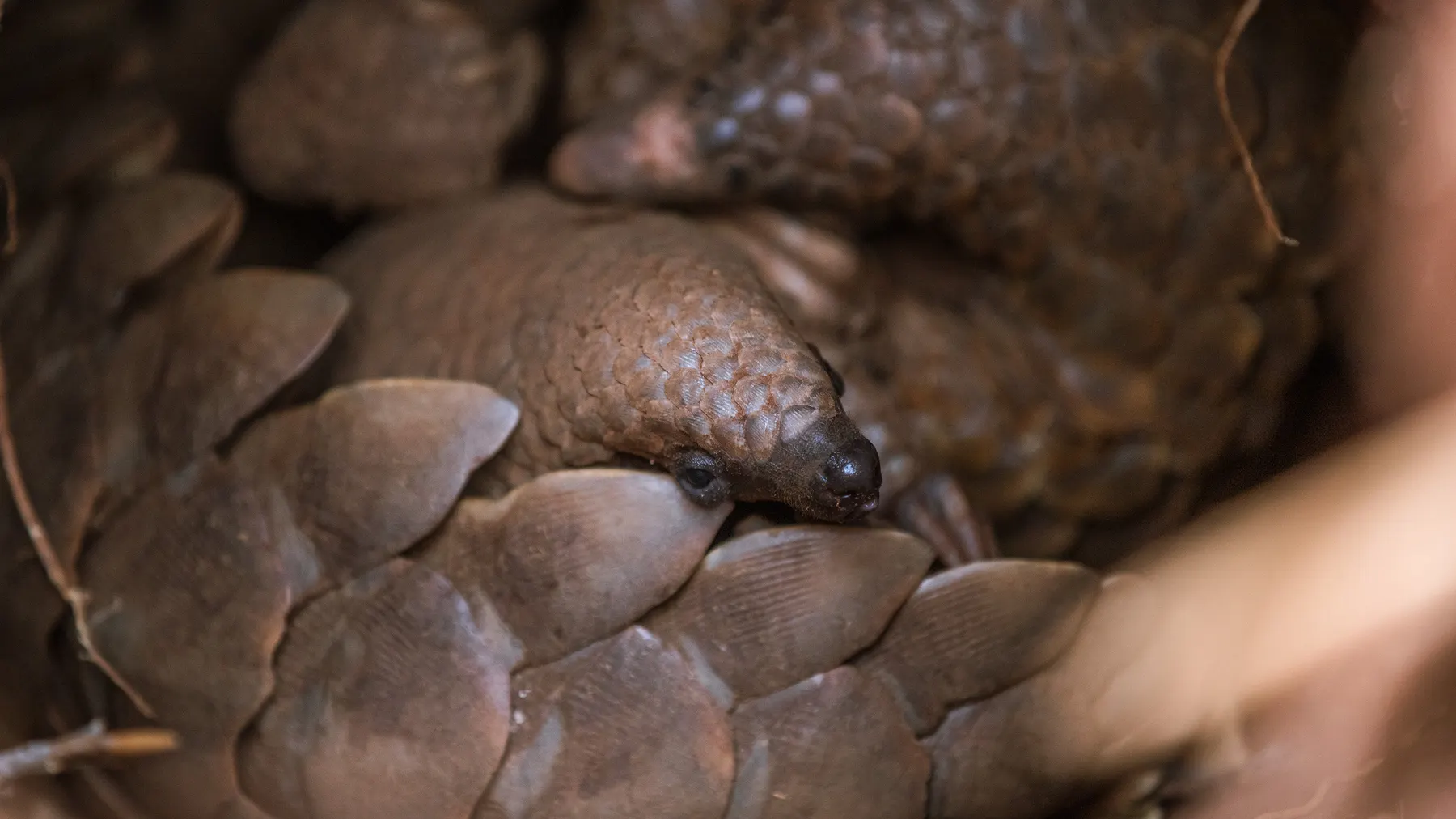
A pangolin curled up, showing its overlapping scales
Photo by Francois Meyer

The problem landscape

Four species under threat

All four African pangolin species — the black-bellied, white-bellied, giant ground, and Temminck’s ground pangolin — are listed as Vulnerable or Endangered on the IUCN Red List due to overexploitation and habitat loss (IUCN, 2025).

East-Asian trade

Pangolins remain the most trafficked mammals in the world, with an estimated 1,000,000 individuals trafficked over a 10-year period (Wildlife Justice Commission, 2025). As Asian pangolin populations declined, African pangolins became increasingly exploited to supply international markets, with African countries emerging as major sources of large-scale shipments of pangolin scales (Heinrich et al., 2017).

Despite pangolins holding the highest level of international trade protection since 2016, a CITES-commissioned review found that seizures between 2016 and 2024 involved an estimated half a million pangolins across 75 countries and 178 trade routes (IUCN, 2025) — clear evidence that trade bans alone haven’t stopped the trade.
Local trade & ‘silent’ mortalities

Local demand compounds the international problem. In various parts of Africa, pangolins have long been used in traditional medicine (Boakye et al., 2014) and hunted as bushmeat (Boakye, 2016).

Beyond poaching, pangolins face significant “silent” threats from human infrastructure. Electric fencing is a major source of mortality for Temminck’s pangolins in South Africa, with published estimates suggesting approximately 377 – 1,028 individuals may be electrocuted annually, although the true figure may be higher (Pietersen et al., 2020). Other anthropogenic threats include road mortality, habitat loss and transformation, and accidental capture in traps (Pietersen, McKechnie & Jansen, 2014).

Lack of data

Reliable population estimates remain unavailable across much of the African range states, making it difficult to measure population trends or assess the effectiveness of conservation interventions. Illegal-trade data are similarly incomplete, as seizure records represent only a detected fraction of trafficking and are influenced by differences in enforcing and reporting (Morin et al., 2020).

In practice, this means the “pangolin crisis” is not one data gap but several — no population baseline against which decline or recovery can be measured, and inconsistent enforcement reporting that leaves trafficking scale to be inferred from seizures rather than known directly. Until these gaps close, conservation organisations are essentially working blind: unable to prove impact, prioritise resources, or hold trade commitments accountable.

Poor public awareness

Although awareness of pangolins has increased substantially over the past decade, knowledge of the animal remains uneven (Thomas & Fletches, 2020). In many range states, local communities aren’t included in conservation planning — and without grassroots awareness of pangolins’ ecological importance or how to protect them, exploitation continues largely unchecked (IUCN, 2025).

Pangolins are yet to be universally recognisable in the way that ‘lion’ or ‘elephant’ conjures an image for most people. Furthermore, pangolins are yet to be given pride of place in Africa’s natural heritage.

Our journey so far

Protection, participation & publicity

Pangolin.Africa was created to address this crisis head-on, working across three interconnected pillars.

Problem

Local trade & silent mortalities

Protection

African pangolins need protection from the local trade and silent mortalities. Realistically, Pangolin.Africa cannot influence the East-Asian trade. It is important for us to be aware of it — especially because so much local trade is linked to the international market — but we can have more influence locally than internationally. Our work builds direct, ongoing relationships with the communities closest to this issue, including an established relationship with traditional healers.

Programme response

  • Pangolert
  • Transport boxes

Problem

Lack of data

Participation

We address the lack of data on pangolins through participation. We gather relevant data to share with scientists, law makers, rehabilitation specialists and other experts in the field. This helps us to make informed decisions about the work we do and the organisations that we partner with.

Programme response

  • A Place for Pangolins
  • Pangolert

Problem

Poor public awareness

Publicity

Poor public awareness of the pangolin is one of the biggest barriers to their conservation. Education about pangolins forms the foundation on which all of our work succeeds. The pangolin is so much more than its plight: they are a cornerstone of Africa’s natural history. We want people to not just know about pangolins, but respect them as part of our heritage.

Programme response

  • Campaigns
  • Partnerships
  • Pangolin Guardians Programme
  • Pangolin Interest Group

Since 2018

Key achievements

Established Pangolin.Africa as an NPO in

2018

Launched the Pangolin Guardians Programme in 2020.

8000+

people have completed the programme online

2026

Launched ‘A Place for Pangolins’ in South Africa

Received

94

calls through our Pangolert number

70

education packs distributed across 5 countries

6

education partners established

Built key relationships with traditional healers in SSA

Created & launched Pangolert in

2026

Launched the

1st

pangolin interest group at the University of Pretoria

How we work

Key approaches

  1. Partnership driven

    Pangolin conservation cannot be achieved by a single organisation, and we believe lasting protection depends on shared ownership. We believe in sustainability over dependency.

  2. Respect for existing knowledge & practice

    Meaningful change comes from working with — rather than against — people’s existing beliefs, knowledge and practices.

  3. Evidence before assumption

    We can’t protect what we don’t understand, which is why we are committed to closing the data gap that has long held back pangolin conservation. We are also committed to sharing our data and information where relevant.

  4. Awareness as the foundation for change

    We believe that awareness is the first step in behaviour change. Public knowledge of the pangolin as a species is a precondition for everyone else’s efforts to succeed.

  5. Storytelling as a tool

    We use storytelling as a means of lodging the pangolin into the hearts and minds of future guardians. We use pangolins as a tool to explore conservation, illegal wildlife trafficking and culture.

From inputs to impact

Theory of change

Vision

Working together to ensure the survival of pangolins by recognising their ecological & cultural importance across the African range states.

Inputs

  • Education materials
  • Programme personnel
  • Partnerships & collaborations
  • CRM database
  • Financial capital

Activity

Protection

Outputs

  • Pangolert
  • Transport boxes

Intended outcomes

  • Improve the welfare of pangolins in African range states

Impact · short–medium term

Create safe environments for pangolins to roam across the African range states

Activity

Participation

Outputs

  • A Place for Pangolins
  • Pangolert

Intended outcomes

  • Gather and share relevant data from participants

Impact · short–medium term

Address the data gaps that exist in pangolin conservation

Activity

Publicity

Outputs

  • Campaigns & partnerships
  • Pangolin Guardian Programme
  • Pangolin Interest Group

Intended outcomes

  • Bring pangolins into the public consciousness in new and exciting ways
  • Educate people about pangolins to create the next generation of pangolin guardians

Impact · short–medium term

Reinstate pangolins as an important cultural tenet of Africa’s natural heritage

What we do

Our programmes

Pangolin Education

The goal
Increase public awareness of the pangolin and create the future generation of pangolin & conservation guardians in Africa.
The problem we’re addressing
Poor public awareness
How we do it
  • The Pangolin Guardians Programme is a free online course
  • Donors can sponsor a physical education box to be sent to our education partners
  • The Pangolin Interest Group is a termly education forum for students at the University of Pretoria

A Place for Pangolins

The goal
To create a network of pangolin safe havens & guardians across South African range states, as well as collecting data to fill knowledge gaps.
The problem we’re addressing
Lack of data & silent mortalities
How we do it
  • Create a website for properties to register their land and go through a verification process
  • Align with government and industry people to approve the verification process
  • Share data to relevant people for research and conservation

Pangolert

The goal
Quickly provide care to pangolins in distress across African range states, as well as collecting safe & secure data to fill knowledge gaps.
The problem we’re addressing
Lack of data & silent mortalities
How we do it
  • Create WhatsApp numbers in African range states
  • Appoint a Pangolert lead in relevant countries
  • Work with local vets and rehab centres to provide care for pangolins
  • Gather data on pangolin location, mortalities and trade

Transport Boxes

The goal
Improve the welfare of pangolins in transit in African range states.
The problem we’re addressing
Silent mortalities
How we do it
  • Design & manufacture transport boxes that are suitable for pangolin transport
  • Provide boxes to first responders — i.e. vets, rehabs, SAPS
  • Make the design open-source

Teaming up

Partnerships

Education partners

We send donated education boxes to partner schools & organisations who can effectively deliver a teaching programme:

  • Global Conservation Corps
  • The Green Anglicans
  • Lilongwe Wildlife Trust

Public awareness partners

We look for new and interesting ways to bring pangolins into the public sphere:

  • Granadilla Swim
  • Upington Rugby

Rehabilitation partners

We support organisations who are at the forefront of pangolin rehabilitation:

  • Umoya Wildlife Centre
  • Kalahari Wildlife Project

Financial partners

Pangolin International Limited is our primary financial partner. All bednight donations are received via this company.

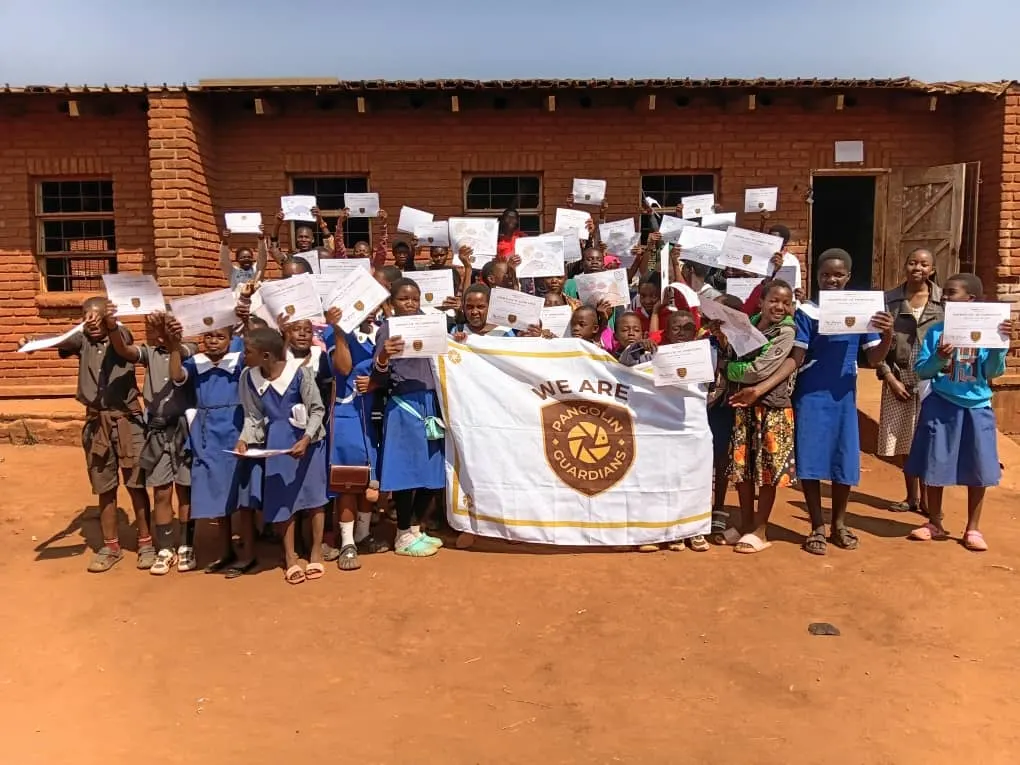
Learners holding their Pangolin Guardian certificates behind a “We are Pangolin Guardians” banner

What’s next

Looking forward

  • Grow our collaborative network
  • Assist with essential research
  • Grow our funding network
  • Have a measurable impact on pangolin survival rates