
Learn
Learn more about pangolins.
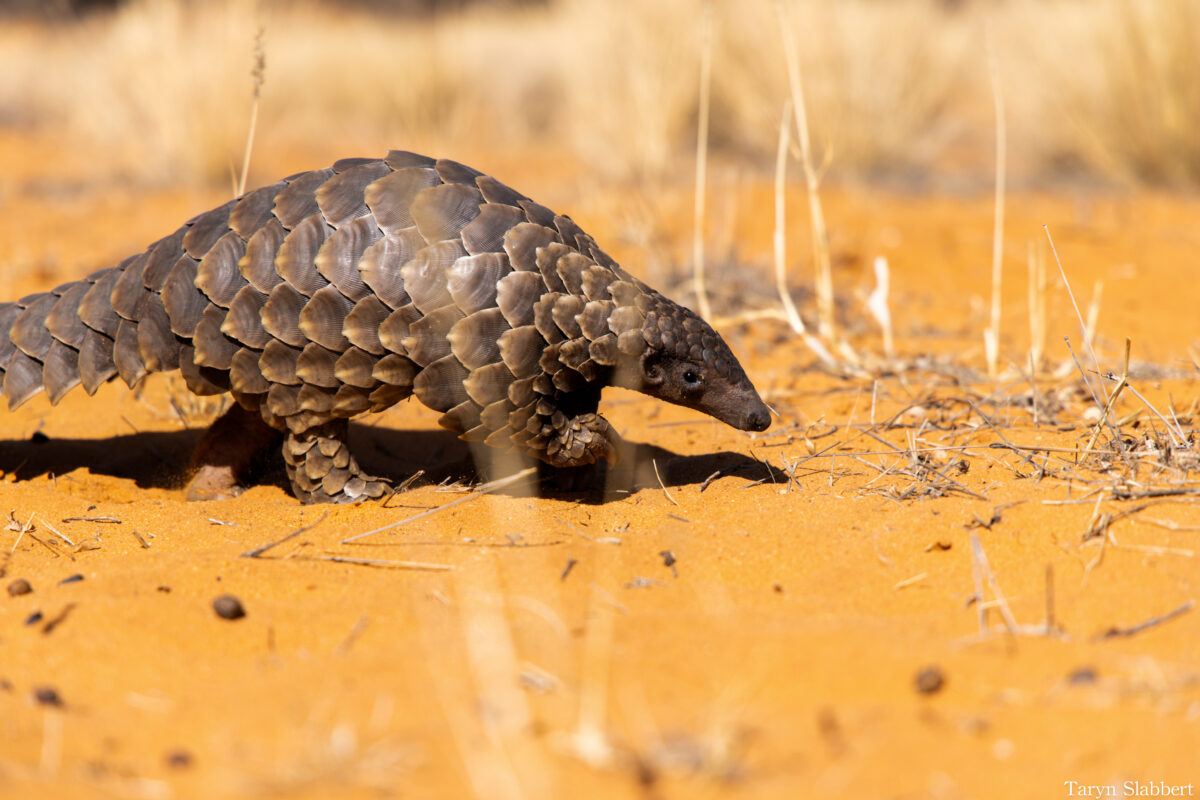
Pangolins are among the most unique and intriguing animals in the natural world. They are also misunderstood and mistreated — and in urgent need of our help.
Our mission
Knowledge is the first step to conservation.
At Pangolin.Africa, we believe that spreading knowledge and awareness about pangolins is the foundation of building a community of people who want to save them.
Below you'll find the Pangopedia — our living FAQ covering everything from pangolin biology to how you can help. And if you'd rather watch: our documentary Eye of the Pangolin follows two men on a mission to capture all four African pangolin species on camera for the first time.
Watch
Eye of the Pangolin.
The documentary that follows two men on a mission to capture all four African pangolin species on camera — and sparked a global movement.
Pangopedia & FAQ
Everything you wanted to know about pangolins.
Are pangolins mammals or reptiles?
Despite their scaly appearance, pangolins are mammals — warm-blooded, give birth to live young and produce milk to feed them.
What are pangolin scales made of?
Pangolins are the only mammals wholly covered in overlapping keratin scales — the same material as your fingernails. The scales act as armour against predators.
Where do pangolins live?
There are eight species globally. Africa is home to four: the Temminck's ground pangolin, giant ground pangolin, black-bellied pangolin and white-bellied pangolin. Asia hosts the other four.
What do pangolins eat?
Pangolins are insectivores and feed primarily on ants and termites. A single pangolin can consume more than 70 million insects a year.
How long do pangolins live?
Pangolins have been known to live up to 20 years in captivity, though lifespans in the wild are harder to document.
What is a pangolin's closest relative?
Despite appearances, pangolins are more closely related to cats, dogs and bears than to armadillos.
How big is a pangolin?
Species range from the tiny white-bellied pangolin at 1–3 kg to giant ground pangolins exceeding 30 kg.
How do pangolins defend themselves?
When threatened they roll into a tight ball, protecting their vulnerable head, legs and soft underside behind layers of armoured scales.
Why are pangolins endangered?
The primary threat is illegal trade. Pangolins are heavily targeted for their scales, used in some traditional medicine systems despite no scientific evidence of medicinal value.
Are pangolins protected by law?
Yes — all eight pangolin species are protected under international law via CITES, which prohibits commercial trade.
How can I help pangolins?
Raise awareness, support verified pangolin-centred NGOs, report any sightings to Pangolert, and take our free Guardian course to learn what to do if you ever encounter one.
What should I do if I see a pangolin in the wild?
Observe from a distance and do not approach, handle or disturb it. Then report the sighting to Pangolert so our teams can follow up.
Take the next step
Become a Pangolin Guardian today.
Fifteen minutes with us and you'll know enough to make a real difference the next time a pangolin's life crosses yours.