
Blog
Pangolins: will they become the dodo of our generation?
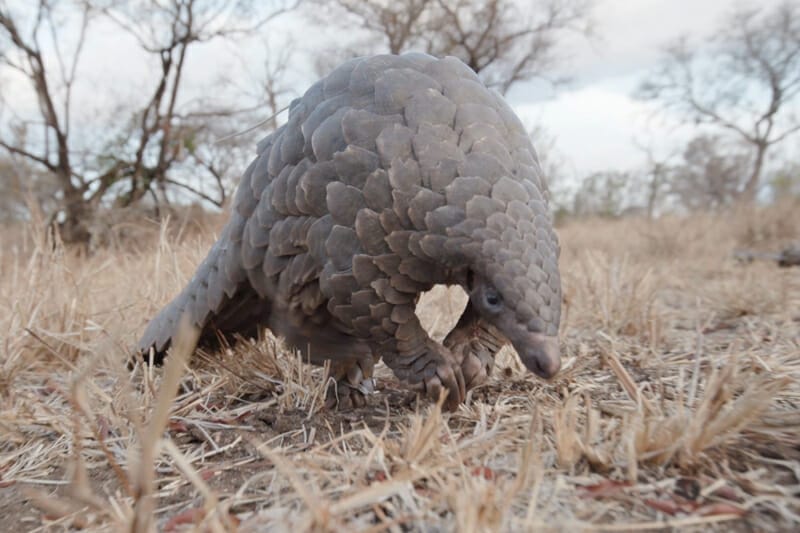
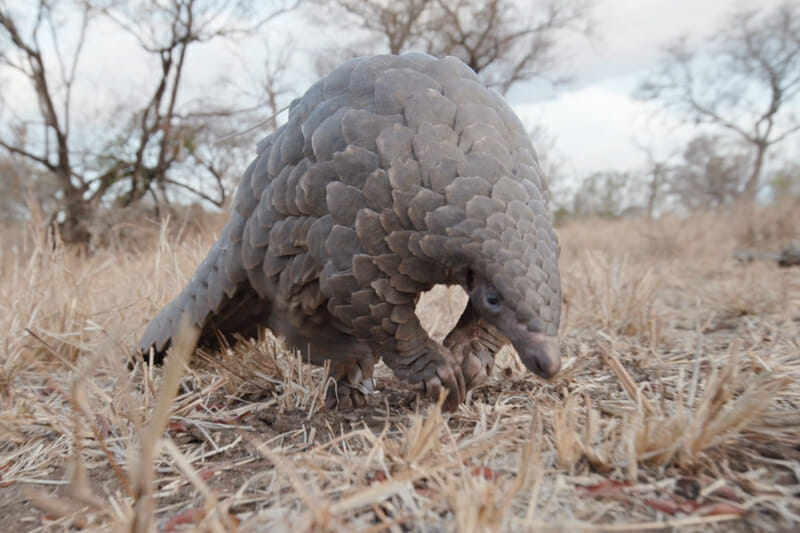
Pangolins are beautiful, bewitching creatures. They are also the most trafficked wildlife species on earth.
Yet as you are reading this, you are probably wondering: “What is a Pangolin?”
Many people have never heard of a pangolin – let alone seen one in real life. Sadly, this enigmatic species could become extinct before most people even realise they exist, due to a slew of factors threatening their survival. Illegal poaching, the bushmeat trade and habitat destruction are decimating their numbers.
Pangolins, sometimes called scaly anteaters, are strange looking creatures.
With the exception of their underbellies, their bodies are covered with protective, overlapping scales which make up 20% of their body weight. Despite their reptilian-like appearance, pangolins are in fact mammals and mature females can give birth to one pango-pup each year.
There are eight different species of pangolin in the world. Four of the species occur in Asia and four are found in Africa, namely the Giant Ground Pangolin (Smutsia gigantea), Temminck’s Ground Pangolin (Smutsia temminckii), the Black-Bellied Pangolin (Phataginus tetradactyla) and the White-Bellied Pangolin (Phataginus tricuspis).
The African pangolin species occupy a range of habitats from tropical rainforests to grasslands and savannahs in southern, central and east Africa.
The only species occurring in South Africa (but sadly nowhere near the Mother City) is the Temminck’s Ground Pangolin which is the second largest – and probably the most widespread – of all the African pangolin species.
Pangolins lead secretive, solitary and largely nocturnal lives. They survive on an insectivorous diet consisting mainly of ants and termites and use their extraordinarily long, sticky tongues to forage.
Pangolin populations are under such threat that they could soon disappear, forever.
Two of the four African species – the Giant Ground Pangolin and the White-Bellied Pangolin – are listed as “endangered” on the Red Data List of the International Union of the Conservation of Nature (IUCN). The other two African species – Temminck’s Gound Pangolin and the White-Bellied Pangolin – are listed as “vulnerable”. In an attempt to protect pangolins, CITES (the Convention on International Trade in Endangered Species of Wild Fauna and Flora) has listed all four African and four Asian species under Appendix 1 in January 2017. This listing prohibits all international trade in specimens of the species, except for scientific purposes.
In spite of this, pangolins are still being poached and trafficked in staggering numbers to satisfy the huge demand from the African and Asian traditional medicine markets. The decimation of the four Asian species has seen a dramatic spike over the past decade in demand for the African pangolin, with one taken from the wild EVERY FIVE MINUTES.
They are poached for their scales – boiled off their body to use in traditional medicine; their meat, which is considered a high-end delicacy in China and Vietnam; and their blood – regarded as a healing tonic for various ailments in traditional Chinese medicine.
Pangolins are also vulnerable to loss of habitat due to an increase in agriculture and other land uses. They are not immune to the effects of climate change either, as changes to their natural environment affect the availability of ants and termites.
Furthermore, studies suggest that around 1,000 pangolins are inadvertently killed each year on electric fences on game and livestock farms across Southern Africa.
These beautiful, captivating creatures are an integral part of Africa’s rich, natural heritage. Our four species should be revered and fiercely protected for current and future generations – not only for their contribution to our continent’s biodiversity and the unique value they add to the tourism industry (as one of the most sought-after animals to see on safari), but also for their significant role in the natural environment as a keystone species:
Fortunately a number of non-profit organisations in South Africa – and across the continent – are dedicated to the survival of the species and are collectively leading pangolin conservation efforts on the ground.
But the conservation field alone cannot save pangolins and greater collaboration with the tourism industry, government, business and civil society is critical to ensure their survival.
Encouragingly, several local and international figures – such as SA cricketing legend Mark Boucher, Prince William and Leonardo de Caprio – are now lending their name to pangolin conservation, bringing the plight of the pangolin to the global stage.
Watch the ground-breaking 2019 film Eye of the Pangolin for free on YouTube. Then share the film link with your friends and family and help make this the most watched wildlife documentary ever.
Awareness is the first bold step in creating the change needed to turn the tide on one of the most critical environmental issues of our time.
Be a part of it.